
 "The next album I want to make in my garage" says a Dave Grohl 16 years younger, who not long ago played two sold-out concerts at Wembley Stadium with the Foo Fighters, speaking into the camera. This scene is part of the documentary Back and Forth; the album mentioned is the four-time Grammy-winning Wasting Light.
For the recording sessions in 2010, the band members and their families decamped to Grohl's house in Encino, California. Between all the hustle and bustle, it's hard to determine the exact number of children squealing with joy as they romp through the house, garden, and pool. In the midst of it all, rock greats like Bob Mould (Husker Du), Krist Novoselic (Nirvana), and legendary producer Butch Vig gather for the analog recordings.
A four-year-old Violet Grohl taps her father on the shoulder while he is in the middle of tracking guitar parts. Drenched in sweat, he has to explain - while still playing - why the swimming pool has to wait a moment, all without ruining the take on the tape with a stray note.
To put it briefly: The world of the Foo Fighters is very much in order; a collective late-summer feel-good vibe hangs over this small-scale creative oasis in the heart of L.A.'s San Fernando Valley.
The same place in 2026: "Look, I'm at home in my little garage studio; the sofa is so tiny that the whole band couldn't even sit on it at the same time," Dave Grohl comments, panning his laptop camera at eight o'clock on a March morning to give a brief virtual tour of the room. This space, serving as both an office and a home studio sparsely equipped with recording gear, remains the creative heart for the Foo Fighters frontman.
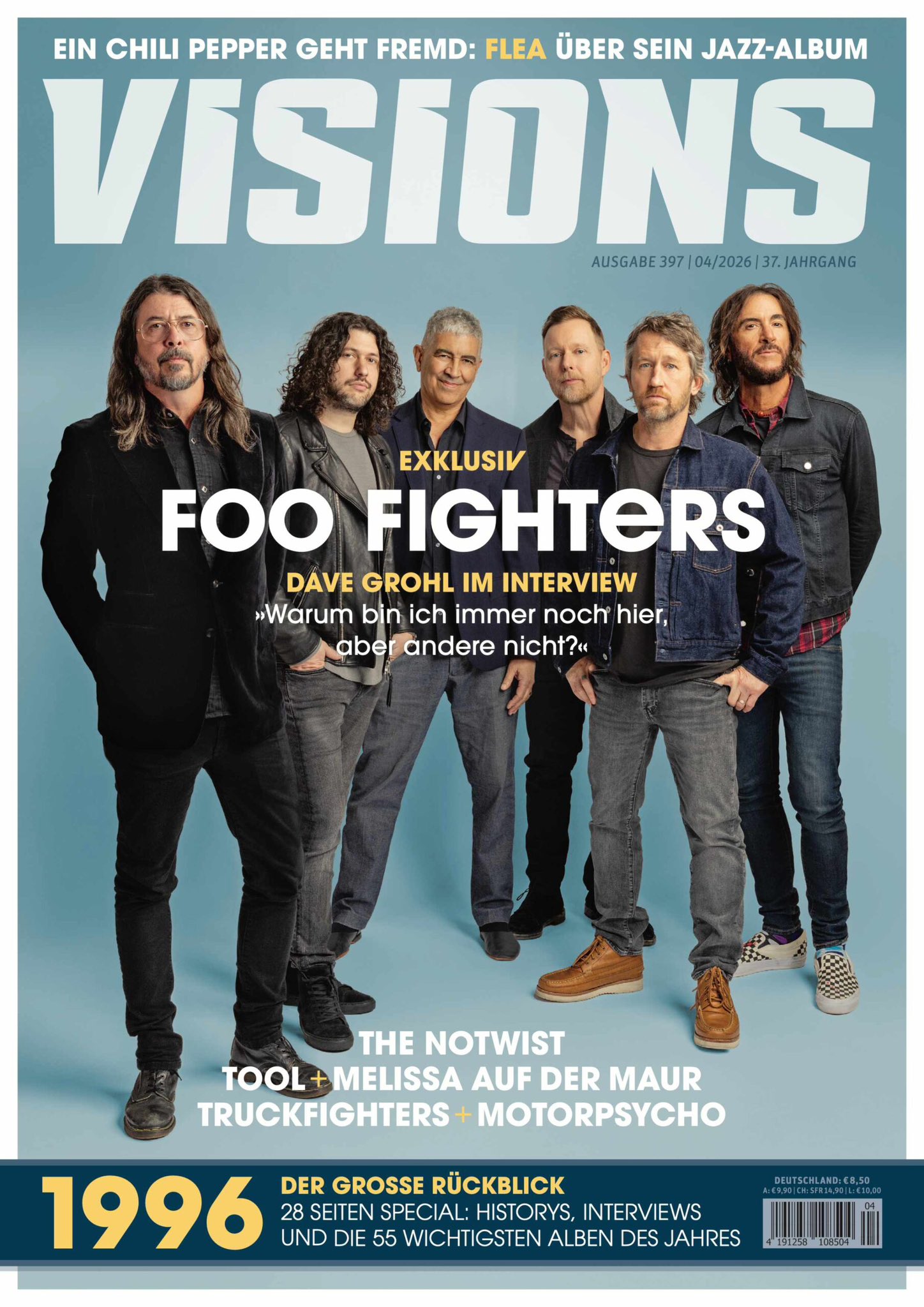
Except now, in the spot where Butch Vig sat at the mixing console in 2010, rolling and splicing analog tape, Grohl himself sits discussing the twelfth Foo Fighters album, Your Favorite Toy. For the 57-year-old, it is a quiet week - the "calm before the storm" - before major live shows and more press dates begin. It is no coincidence that Grohl is breathing life into the new record right here, where an important piece of band history was once written: it is the first album since the death of drummer Taylor Hawkins in 2022 that once again radiates full-fledged "band energy."
TIME IS NOT ENOUGH
"The next album I want to make in my garage" says a Dave Grohl 16 years younger, who not long ago played two sold-out concerts at Wembley Stadium with the Foo Fighters, speaking into the camera. This scene is part of the documentary Back and Forth; the album mentioned is the four-time Grammy-winning Wasting Light.
For the recording sessions in 2010, the band members and their families decamped to Grohl's house in Encino, California. Between all the hustle and bustle, it's hard to determine the exact number of children squealing with joy as they romp through the house, garden, and pool. In the midst of it all, rock greats like Bob Mould (Husker Du), Krist Novoselic (Nirvana), and legendary producer Butch Vig gather for the analog recordings.
A four-year-old Violet Grohl taps her father on the shoulder while he is in the middle of tracking guitar parts. Drenched in sweat, he has to explain - while still playing - why the swimming pool has to wait a moment, all without ruining the take on the tape with a stray note.
To put it briefly: The world of the Foo Fighters is very much in order; a collective late-summer feel-good vibe hangs over this small-scale creative oasis in the heart of L.A.'s San Fernando Valley.
The same place in 2026: "Look, I'm at home in my little garage studio; the sofa is so tiny that the whole band couldn't even sit on it at the same time," Dave Grohl comments, panning his laptop camera at eight o'clock on a March morning to give a brief virtual tour of the room. This space, serving as both an office and a home studio sparsely equipped with recording gear, remains the creative heart for the Foo Fighters frontman.
Except now, in the spot where Butch Vig sat at the mixing console in 2010, rolling and splicing analog tape, Grohl himself sits discussing the twelfth Foo Fighters album, Your Favorite Toy. For the 57-year-old, it is a quiet week - the "calm before the storm" - before major live shows and more press dates begin. It is no coincidence that Grohl is breathing life into the new record right here, where an important piece of band history was once written: it is the first album since the death of drummer Taylor Hawkins in 2022 that once again radiates full-fledged "band energy."
TIME IS NOT ENOUGHTime alone has not healed the wounds torn open by the events of 2022. The fact that the Foo Fighters still exist today is largely thanks to the predecessor album, But Here We Are, which the band recorded while still in a state of shock following Hawkins' death. "That album was one of the hardest I've ever made: losing Taylor and simultaneously trying to keep our extended band family intact was very difficult, but we did it," says Grohl, who took his place behind the drum kit himself for those recordings. "As a band, we've always been very close; our children and families are close friends. We all came together to help each other move past the loss of Taylor. And for me personally, there was also the loss of my mother to process. The album is, on one hand, a love letter to the two of them, and on the other, something that spurs you on to keep going and somehow look forward." Bassist Nate Mendel also has to take a deep breath before speaking about the record that laid the foundation for all further band activity: "I love this album; it was exactly what we needed in that moment to deal with the terrible loss of Taylor. The record is multi-layered, reflective, and has a clear purpose, not to mention all the emotions it contains. We somehow made it through that time, and we owe it to this album-it helped us heal and figure out how we could remain a band despite everything." ALL AT ONCE
The band began looking forward at an almost dizzying pace: by 2023, live shows were already taking place again with Josh Freese as their new touring drummer. It seemed like a textbook healing process, one the band truly deserved after everything they had been through-but it also sounded a bit too good to be true. And indeed: in September 2024, despite successful tours, the first cracks began to spread across the hastily plastered facade. Grohl made the surprising announcement that he had fathered a daughter out of wedlock, vowed to take responsibility for her, publicly apologized to his family, and asked for their privacy to be respected. Shortly thereafter, the Foo Fighters canceled further planned concerts, citing no official connection. However, social media comment sections made that connection all the more clearly. What is certain is that Grohl traded his "Mr. Clean" image for an "Only Human" shirt and realized that a year-long hiatus-long for the Foo Fighters, though a mere five-minute break in the Tool universe-was overdue to address private matters. The rest of the band also benefited from the breather. Then, in May 2025, in another surprise to the outside world, came the dismissal of Josh Freese from the band. Freese initially appeared stunned, then hurt, before having to accept that the chemistry between members of a band is something that simply cannot be forced through rehearsal. Grohl has since explained the reasons for Freese's departure more diplomatically: "You can give identical notes to two drummers, and they will still play them differently. It's about how that person feels, how they think and react, even down to the position of the hands and wrists, and of course, their sense of rhythm. Making music together is like having a conversation: sometimes it's easy, sometimes it's hard. When it's easy, you feel closer to the person." Such an "easy conversation" has since emerged with now-former Nine Inch Nails drummer Ilan Rubin, whom all three interviewed band members rave about equally: "Ilan is so damn perfect for this band, so damn perfect!" Grohl grins. Mendel recalls the rehearsals: "I can't count on one hand how many times Dave turned to him during practice with a look that clearly said: 'I can't believe he just played that.' And Dave is anything but an amateur behind the drums himself. Ilan isn't just an insane drummer; he's probably also the best guitarist in the band-a real musical powerhouse!" Guitarist Chris Shiflett has nothing but good things to report as well: "We were in Dave's tiny room above his garage-I don't think it's physically possible for us all to be in there at the same time. So I walked in, listened to what Ilan had recorded before me, and just thought: 'That's some cool shit!'" NOT A SCIENCE
Freese, who has now found his feet as Rubin's successor in Nine Inch Nails (where he previously played from 2006 to 2008), may indeed have had a harder time as the first drummer following the 25-year Hawkins era than if he had joined the band at any other time. Simultaneously, the topic of band chemistry has the potential to be an inexhaustible field of scientific research; the processes that determine the dynamics within a band structure are that complex and often intangible. No one knows this better than Mendel, who has seen every member of the Foo Fighters come and go: "I often wonder how bands that don't have this sense of community manage to stay together. I'm very grateful that we have it, and I can't imagine playing in a band under any other circumstances; I need that chemistry." Exactly how that is composed is the million-dollar question. If one could use a "Periodic Table of Bands" to find the best new members without endless auditioning, it would certainly save time and nerves-but it isn't that simple. The Foo Fighters bassist searches for a long time for the right description: "The term 'brothers' is used often, and as cliché as it may be, I completely understand why: the Foo Fighters aren't the family I would have chosen for myself, but I love these guys infinitely for everything we've survived and achieved together. Because of that, it's a completely different kind of love than when you choose a friend because you're so similar. I know I'm not telling this story for the first time, but I would have avoided a guy like Taylor Hawkins at all costs if I had met him out in the wild." Carrying this thought further, Mendel finally reaches the most important point: being in a band isn't about conforming to one another as much as possible, but about finding characters who, in the best possible way are different in nature: "If I'm being completely honest, I also avoided him at all costs when he first joined the band. He had this way of approaching things that was completely incompatible with my own methods. We are 100 percent incompatible, and yet within the band, we became best friends. I value all the things I was able to learn from him precisely because we are so different as people. That love has grown with every year. And it's great when you get to experience something like that. Chris and I also have completely different worldviews. It makes my life better, and it makes the band structure stronger, that we can come together with our different views and grow alongside one another. That's what I like about us as a band-that it welds us closer together instead of leading to conflict." And while his colleague on lead guitar adds the short and snappy, "Ilan really fits like a glove", Grohl himself has another less-than-flattering thought to throw in regarding the band dynamic: "When you first come together as a band, you're in that exciting honeymoon phase. We, on the other hand, are six men who have been married to each other for a very long time. Over time, the relationship dynamic becomes much more about what's happening on the inside than the things affecting us from the outside. And we certainly aren't getting any handsomer, that's for sure." PLAYTIME
The other members of the band primarily notice that a new Foo Fighters album is brewing when Grohl suddenly begins bombarding them with text messages. These contain demos and, in this case, scheduling suggestions like: "Once you've driven the kids to school and finished the grocery shopping, come over-we need to record something." The reason for the excitement: among the roughly 50 demos the Foo Fighters chief has accumulated over the last two years, he struck "punk rock gold" while listening through them one evening. "Suddenly, in this unsorted demo playlist, one punk rock song came after another, and I thought: 'Oh shit, these ten songs really work well together.' I listened to them a few more times in a row and thought: 'To hell with the other songs, this is it!'" Mendel also feels this urge to distance themselves from the predecessor: "After we made that record and survived that time, it was important to us that we do something next that wasn't quite so dense and heavy with meaning. Something more like how we would have recorded when we were younger: just us, in a small room, playing fast, weird songs with snotty lyrics, a certain attitude, and a certain lightness as a counterpoint to the record before. Both are very different albums. I actually believe that in our discography, there are no two consecutive albums that form such a strong contrast." The spontaneity of this creative process is clearly audible on Your Favorite Toy, which ingratiates itself in quieter moments with sweet melodies like a fluffy favorite toy, only to kick the listener in the shins in snotty punk fashion the next moment-ready to steal all your favorite toys in a mean plot twist. One of these songs is the aggressively erratic "Spit Shine." "Me, Pat (Smear), Chris, and Nate all come from that hardcore punk rock background of the 70s and 80s," Grohl explains. "Making a song like 'Spit Shine' is like opening your chest to show: 'Hey, this is still the music my heart beats for.'" Shiflett has a very specific idea of how the guitars should sound in such a song: "My intention was: find the dirtiest sound and drive it through the song; don't overthink it and definitely don't polish it smooth. That was the motto of the record anyway. The song was recorded super fast." Mendel points to a moment in the first verse of the song that lifts you out of your seat like an emergency brake: "That's one of my favorite parts on the album, when these wild riffs suddenly stop unexpectedly and Dave lets out this sigh. Who would have thought that exhaling could be such a meaningful lyric?" It's these simple flourishes that convey the impression of a band coming together with a massive amount of pent-up, youthful energy that needs to be released: "The record sounds exactly how we feel right now," Grohl agrees. "When we get together and play one of those small club gigs, like we just did, we suddenly feel as energized as we did 30 years ago-which is weird, because according to expectations, we should be slowing down, standing on stage with acoustic guitars playing lullabies. But screw that!" Despite this "second spring" for the band-in which Rubin, who is more than 20 years their junior, certainly plays a part-the song content isn't just recklessly snotty; at times, it is as dark and reflective as in the song "Of All People." WHY ME, OF ALL PEOPLE?
"Of all people you survived, no matter how fucking hard you tried / You know you should be dead, but you're alive instead," goes the first verse-harsh words that could be directed at one's own reflection or at another person. Grohl recalls the origin: "I attended a concert and met someone I hadn't seen in over 30 years. This person was involved in the Seattle drug scene, and I just couldn't believe he had survived." In the 90s, heroin replaced the crack epidemic of the 80s with terrifying speed. The influx into the US metropolis of Seattle was so great that it earned the unofficial title of "Drug Capital of the USA," joining other cities like San Francisco as a hotspot not only for music but for the drug scene as well. Subcultures like Grunge moved in the eye of the storm, and Grohl observed it all up close as the drummer for Nirvana. Back then, much like Rubin today, he was the new guy, the youngster in the band kicking up a fresh breeze with his unbridled energy. In a very short time, however, he had to watch as his bandmate and friend Kurt Cobain, among others, lost the battle against addiction. "I never took heroin myself, not to this day, but Seattle had a massive problem with the drug back then, and this person was right in the thick of it. Many loved ones didn't survive that time, and I stood there at that concert just thinking: 'I can't believe that you, of all people, are still here!' It was a contradictory, strange feeling. I was happy this person was still alive, but at the same time, this anger rose up in me, like: 'Of all our friends we lost during that time, YOU survived?!' I came home later, drunk, grabbed my acoustic guitar, and wrote the song in five minutes." Where others might pause to reflect, Grohl remains in a constant creative gallop: "The next day, eight in the morning, I called Ilan and told him: 'We have a new song, and we have to record it NOW.' It was only after reading the lyrics again that I connected it to the phenomenon of 'survivor's guilt.' Sometimes you think about it and ask yourself: 'Why am I still here while others aren't?' That's not primarily what the song is about, but yes, it reflects those feelings too." NOT TAKEN FOR GRANTED
Just as the past often grabs an individual with a cold hand on the neck when they least expect it, long-standing bands like the Foo Fighters never exist in a vacuum, no matter how young and fresh they may feel. There is this shared history that doesn't necessarily have to be presented on a silver platter with every new album, but it's still there. In the case of this band, there is also the backstory - which Grohl, as a "57-year-old fuckin' rock musician" (his words), is well aware of, and whose parallels to recent events are hard to deny: "Take the first Foo Fighters record-just like But Here We Are, it was an album about survival. Nirvana was over, and I had this music in my heart and in my head, and I didn't really know how to get to it. That knot only finally untied itself with that first album." At the moment, for the first time since 2022, a cleanly untangled thread lies before the Foo Fighters-but anyone who has ever set down a neatly wound headphone cable, only to pick it up moments later as an eight-fold Gordian knot, knows how quickly that can change. This is also on Shiflett's mind when it comes to the upcoming major Foo Fighters live shows, which will keep the band busy well into next year: "If I think about it too much, it overwhelms me. Especially with the last few years in mind, I try to block it all out and stay as present as humanly possible. I only believe we're actually performing when we walk out onto that stage, not a moment sooner. Don't get me wrong, I'm looking forward to it. But I don't take it for granted anymore; the past taught me that." Mendel adds pragmatically: "I'm looking forward to everything working out," but after being asked for a less "typical bassist" answer, he laughs and elaborates: "Imagine the band playing fantastically, and the audience receiving it that way too. That's the state I'm working toward. And when you reach it, you're just bursting with confidence, and all self-doubt vanishes. When it works with the crowd, you can suddenly be completely yourself, nothing else matters-you glide along on this collective goodwill and don't have to worry about yourself at all. That's the point where I completely relax and surrender to the music. I'm looking forward to succeeding at that again on the upcoming tour." Grohl is optimistic about the year ahead for other reasons as well. Not only have the Foo Fighters successfully kickstarted a "becoming of a band" once again, but his daughter Violet Grohl has also quietly signed a record deal and will release her debut album this spring. She surprised Grohl with the news only after the fact. Meanwhile, he shares a little inside scoop: "I was just talking to her right before we started this interview; she's on a plane heading home, and she told me about her first interview with VISIONS. I just said: 'I really have to hang up now to be on time for my own interview with VISIONS!'" Underneath the mock indignation that this young music star is actually speaking to the international press before him, he sounds more than proud and happy. It almost seems as though the world in the House of Foo is finally in order again. Words: Juliane Kehr Pics: Elizabeth Miranda